Lenovo Tab One vs Amazon Fire HD 8: ordinary Android wins this small-tablet fight
The Lenovo Tab One is the better small tablet for most buyers because its normal Android app access and easier one-handed shape outweigh the Fire HD 8’s lower-resolution screen, restricted store and painfully slow bundled charger.
Lenovo Tab one
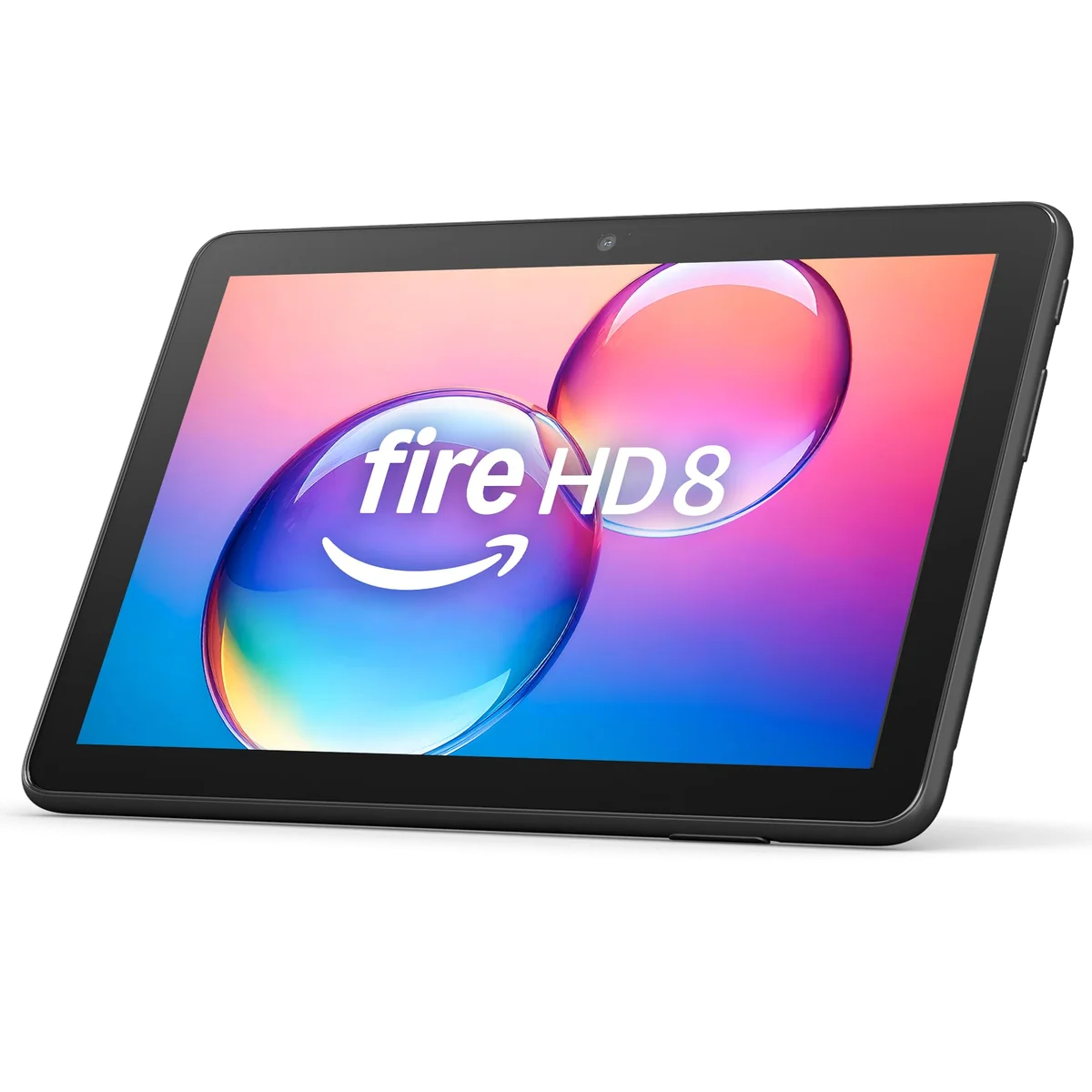
Amazon Fire HD 8 2024)
These are not miniature versions of expensive tablets. Both are compact, low-powered screens for reading, streaming, browsing and simple apps, and both become frustrating when asked to multitask quickly or run demanding games. The decision turns on a more consequential difference: the Lenovo behaves like an ordinary Android tablet, while the Fire HD 8 behaves like an Amazon appliance.
That makes the Lenovo Tab One the safer purchase even before its included folio enters the calculation. Google Play gives it access to the conventional Android app ecosystem, its 4.91-inch width is notably easier to wrap a hand around, and its battery can cover a day of light use. The price of that portability is visible hesitation from the Helio G85 processor and coarse text on a 1340 × 800 display.
The Fire HD 8 is still defensible for a household built around Kindle, Audible, Prime Video, Alexa and the streaming apps available through Amazon’s store. Its 4 GB and 64 GB configuration is the sensible version of the 2024 model, but Google Play is not officially supported and familiar Google apps are missing from the normal experience. A bargain stops feeling clever when the first job requires an unsupported workaround.
Buy the Lenovo Tab One if
You want a compact general-purpose tablet for reading, travel video, web browsing and ordinary Android apps, and you can tolerate pauses while apps open or switch.
Buy the Fire HD 8 if
You mainly want Kindle books, Libby, Prime Video, Audible, Alexa and a short list of confirmed Amazon Appstore titles, with no expectation that it will become a conventional Android tablet.
Lenovo Tab one
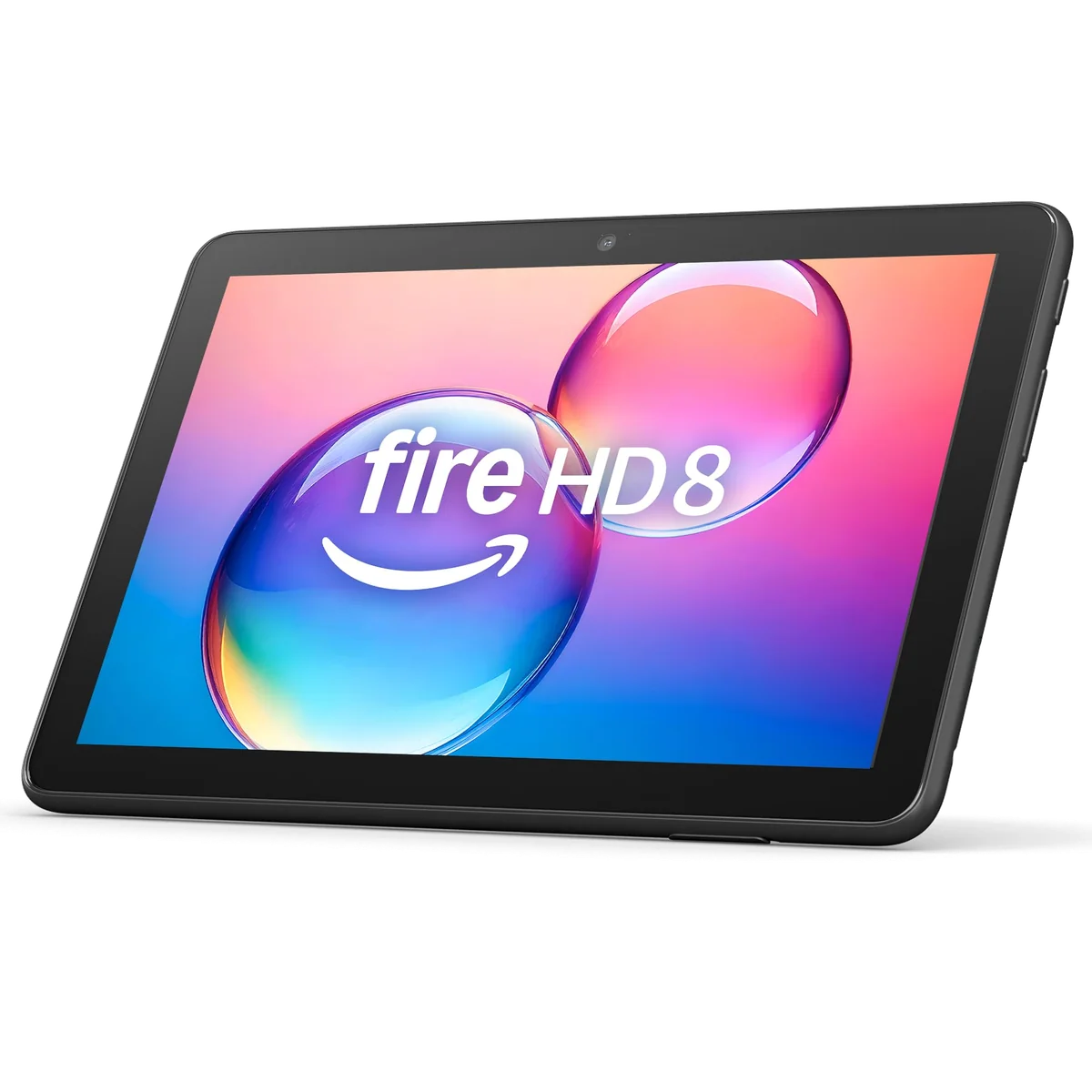
Amazon Fire HD 8 2024)
At a Glance
| Feature | Lenovo Tab one | Amazon Fire HD 8 2024) |
|---|---|---|
| Price Range | — | — |
| Finish | Gray | Black |
| Screen size | 33" | — |
| Check Price on Amazon | Check Price on Amazon |
The app store settles what the specification sheet cannot
On paper, the two tablets look unusually close. Each model here has 4 GB of memory, 64 GB of internal storage, a low-resolution 60 Hz display, microSD expansion, USB-C and a headphone jack. Neither is a strong choice for photography, serious games, dense documents or rapid multitasking. Comparing memory and storage alone therefore misses the part that changes daily use.
The Tab One ships with Google Play and the familiar Android route to mainstream apps. That does not guarantee that every phone app will support its hardware or screen, but it removes the broad ecosystem restriction built into the Fire. Google services, alternative browsers and the usual Android utilities are much less likely to begin with a compatibility investigation.
Fire OS uses Amazon’s Appstore, and Amazon explicitly says Google Play is unsupported. Kindle, Audible, Prime Video, Netflix, Hulu, Disney+, Max, Spotify and Libby cover a persuasive entertainment list, but Chrome, Gmail, Google Maps and Google Docs are not official native options. Some services can be reached through the Silk browser, although a web page is not always an adequate substitute for a maintained tablet app.
It is possible to find instructions for adding Google Play to a Fire tablet, but that process is unofficial, model-sensitive and capable of breaking after software changes. Buy the Fire HD 8 only if its supported experience is sufficient on day one. Our guide to Google Play and missing Fire tablet apps explains why sideloading should not be treated as a promised feature.
Lenovo is easier to hold; Amazon is easier to integrate
The Lenovo measures 8.31 by 4.91 by 0.33 inches and weighs 320 grams without its case. The Fire measures 7.94 by 5.40 by 0.37 inches and weighs 11.88 ounces, or about 337 grams. Amazon’s tablet is slightly shorter, but Lenovo’s much narrower body and rounded edges make the greater difference when a hand must reach around the device.
That narrowness suits ebooks, news, social feeds and video on a tray table. The 8.7-inch Lenovo screen also provides a little more diagonal space than Amazon’s 8-inch panel without becoming a full-size slate. Owners have used it as a light travel screen, a nightstand reader and a coat-pocket companion, although the included folio adds bulk to the bare dimensions.
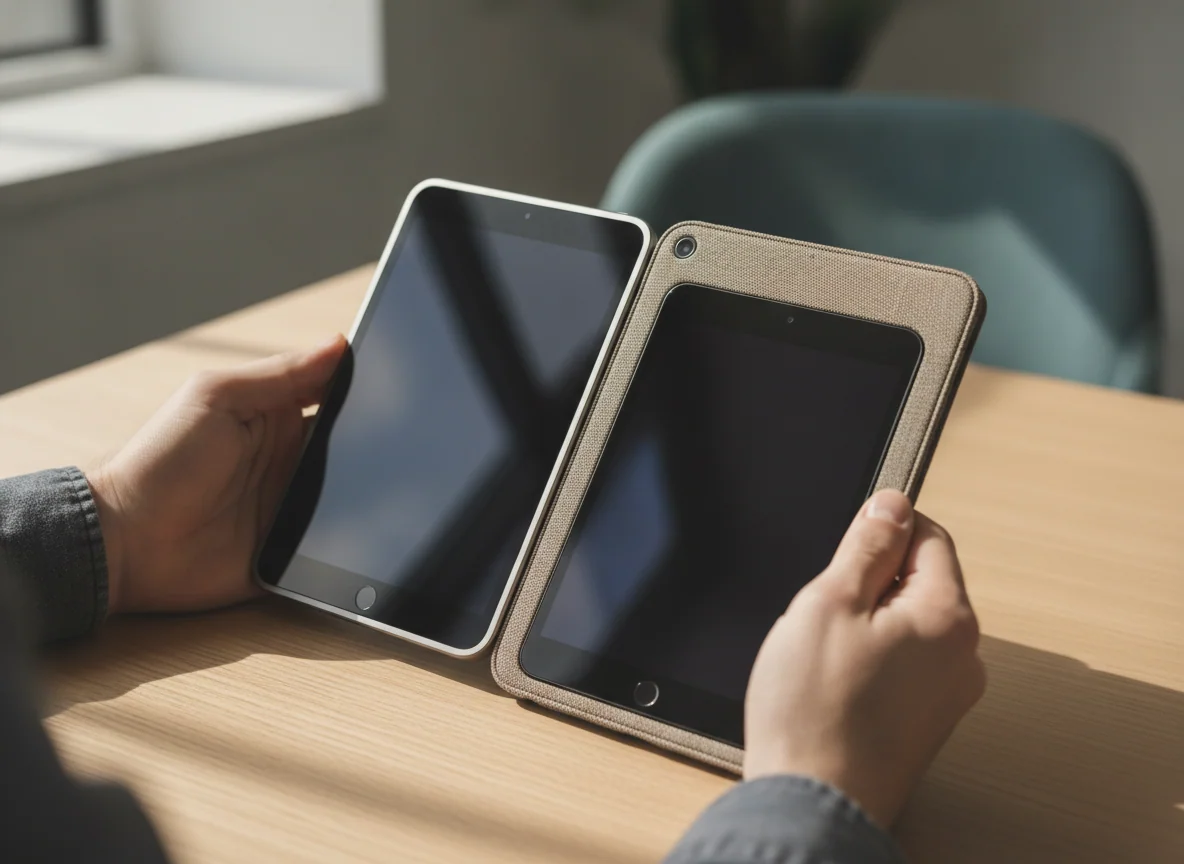
The folio is a real advantage of this exact Lenovo bundle. It covers the display, folds into a handhold and props the tablet up for video, so the first protective accessory is already accounted for. Its stand groove can let the tablet slip when the screen is tapped, and it is not rugged protection, but including an imperfect case is still more useful than requiring one immediately.
The Fire’s wider body remains comfortable for many readers, particularly those who find a seven-inch screen cramped and a ten-inch tablet tiring. It also fits naturally into an Amazon household: Alexa controls, Kindle libraries, Audible purchases and Prime Video require less setup than they would on a generic Android device. That integration is convenience, not versatility, and the distinction matters.
Two soft screens, with no secret premium option
Lenovo’s 8.7-inch panel has a 1340 × 800 resolution at roughly 180 pixels per inch, while the Fire HD 8 uses 1280 × 800 across eight inches at 189 pixels per inch. Neither display renders small typography or detailed PDFs sharply. The Fire fits the same vertical pixel count into a smaller area, but that modest density advantage does not turn it into a crisp reading screen.
Both are acceptable indoors for novels, ordinary webpages, comics and streaming video viewed at a comfortable distance. Both struggle when the work involves tiny spreadsheet cells, technical diagrams, fine interface text or bright outdoor light. A dedicated E Ink reader remains better for long sessions of prose, while a sharper full-size tablet is better for magazines and dense documents.
Lenovo has the slightly larger canvas and respectable measured brightness for its class; Amazon has the slightly higher pixel density. Neither difference is large enough to choose a winner by itself. If screen quality is the priority rather than carry size, the more useful comparison is between the compact format and the larger models in our small-tablet guide.
Performance is slow in two different flavors
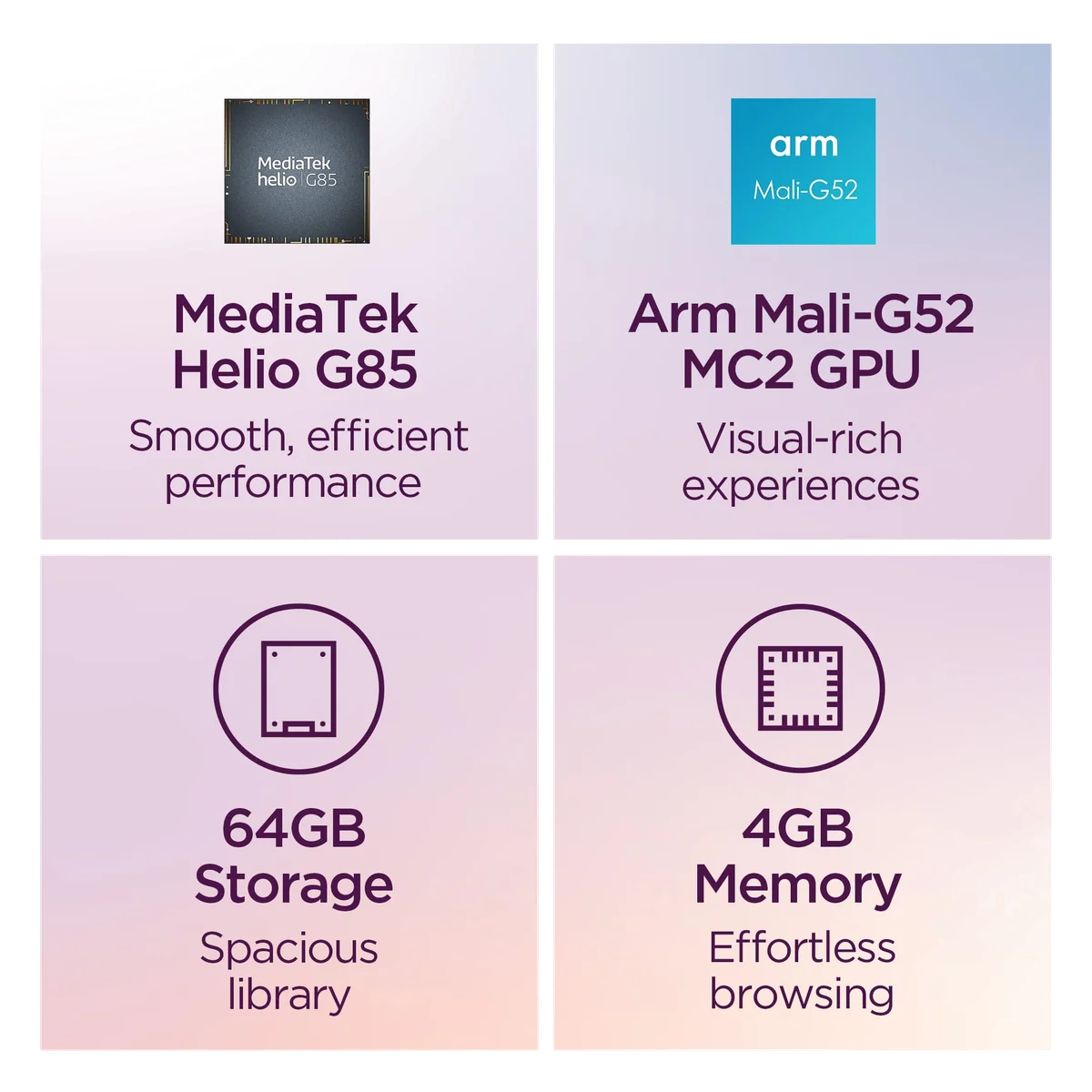
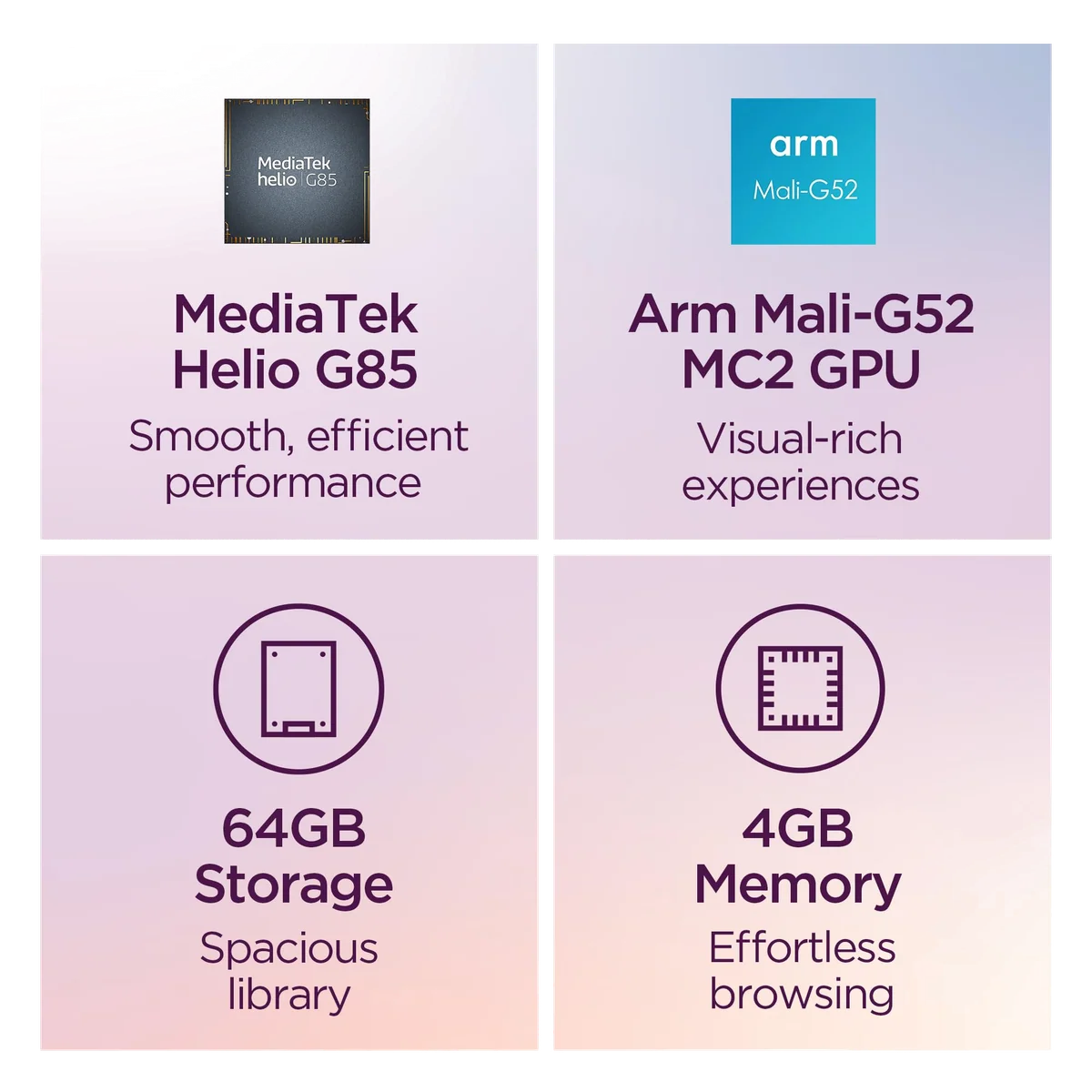
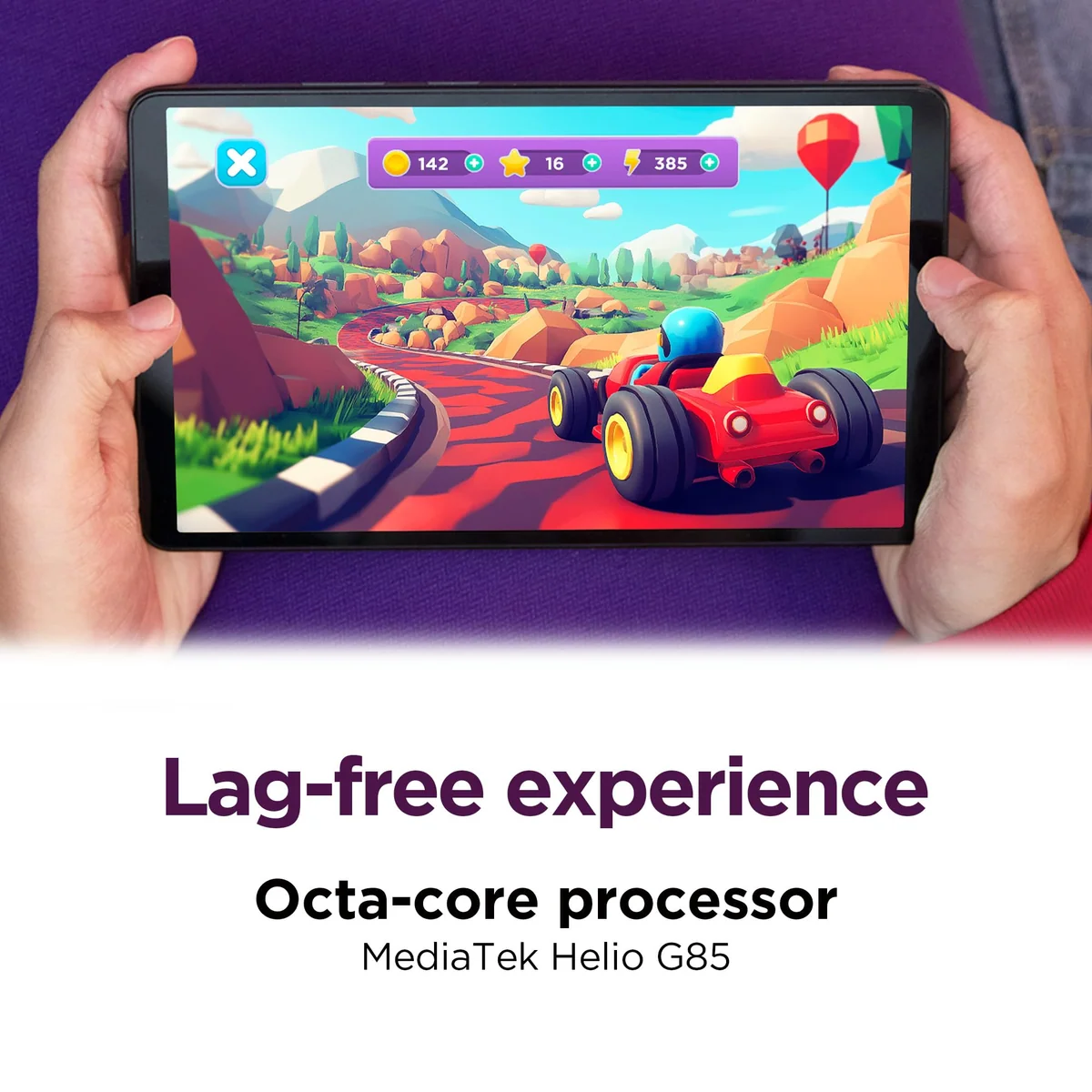
The Tab One combines a MediaTek Helio G85, 4 GB of memory and eMMC storage. Ordinary reading, email, streaming and a few browser tabs are workable after setup activity finishes, but app launches, screen rotation and fast task switching can pause. Apps may reload when memory pressure rises, and demanding games require low settings and modest expectations.
The Fire HD 8 also uses entry-level hardware, pairing a six-core processor with 4 GB of memory in this configuration. Reading and streaming are reasonable, but heavy websites, complex apps and quick returns to the home screen can expose its limits. The additional memory makes this model preferable to the 3 GB version, yet it does not transform the underlying processor.
Lenovo has the better ceiling for light gaming because Google Play provides a broader catalogue, but neither tablet belongs in a gaming recommendation. Simple puzzles, card games and older or well-optimized titles are sensible. Ambitious 3D games, demanding emulation and sustained split-screen work are reasons to choose from our tablets selected for gaming instead.
The differences that survive daily use
| Decision point | Lenovo Tab One | Amazon Fire HD 8 |
|---|---|---|
| Normal app source | Google Play | Amazon Appstore |
| Display | 8.7 inches, 1340 × 800 | 8 inches, 1280 × 800 |
| Memory and storage | 4 GB and 64 GB | 4 GB and 64 GB |
| microSD support | Up to 1 TB | Up to 1 TB |
| Body width | 4.91 inches | 5.40 inches |
| Headphone jack | Yes | Yes |
| Case in this package | Folio included | No case listed |
| Best role | Compact everyday Android tablet | Compact Amazon media tablet |
| Main drawback | Slow hardware and coarse text | Restricted apps and very slow bundled charging |
Battery life is close; charging is not
Both tablets can cover a normal day of intermittent reading, browsing and video. Lenovo advertises up to 12.5 hours of YouTube streaming, while Amazon advertises up to 13 hours across mixed reading, browsing, video, gaming and music. Those are different workloads rather than directly comparable test results, so the sensible conclusion is endurance parity, not a victory measured in half an hour.
The larger difference appears when the battery is empty. The Tab One supports charging at up to 15 W, although its listing does not name a power adapter among the included items. The Fire HD 8 includes a 5 W charger that can turn a full refill into roughly a five-hour wait, while a compatible 15 W adapter can reduce that substantially. Amazon’s tablet lasts well, then wastes more of your time getting ready to last again.
Storage looks equal until the software takes its share
Each model supplies 64 GB before the operating system and bundled software consume their portions, and each accepts a microSD card up to 1 TB. That is enough for a light app collection, ebooks and streaming, especially when downloaded films, music, comics and photographs are placed on removable storage.
A memory card does not erase every capacity concern. Android and Fire OS can restrict which apps or app data move to external storage, and large games still consume internal space. The useful question is not whether one terabyte sounds enormous; it is whether your important apps fit comfortably in the internal capacity left after setup. Our tablet storage guide separates expandable media space from the storage apps actually need.
The cameras and speakers should not decide this
Neither device should replace a phone camera or become the first choice for regular video calls. Lenovo’s basic front camera is adequate for face recognition and occasional calls, while Amazon’s 2 MP front camera produces visibly weak video. Rear cameras on both are suitable for a quick reference image, a code or a document in forgiving light, not important photographs.
Both retain a 3.5 mm headphone jack and Bluetooth, which matters more than their speaker branding. Lenovo’s stereo speakers can become loud enough for casual indoor viewing but lack bass. The Fire’s same-side speakers are quiet and thin. Wired headphones or Bluetooth earbuds are the honest audio upgrade for either travel kit.
The buying actions belong after the compromises
The compact Android choice for readers, travelers and one-app-at-a-time use.
The Lenovo Tab One wins because Google Play, its narrow 8.7-inch body and the included folio make it more useful beyond Amazon’s services.
The Helio G85, slow storage and coarse display make multitasking, demanding games and fine text visibly less pleasant.
The compact Amazon choice for a tightly defined entertainment routine.
The Fire HD 8 earns consideration when Kindle, Libby, Prime Video, Audible, Alexa and confirmed Appstore titles cover the entire job.
Google Play is unsupported, Fire OS promotes Amazon heavily and the bundled 5 W charger can take hours to refill the battery.
Lenovo Tab one
Amazon Fire HD 8 2024)
Choose by the job, not the logo
For reading
Choose Lenovo if reading shares the tablet with general Android apps, web research and services outside Amazon. Choose the Fire if Kindle, Libby and Audible dominate and you already accept Fire OS. Neither low-density LCD is ideal for small print or long outdoor reading.
For travel
Lenovo’s narrower body and supplied folio make it the better all-purpose travel companion. The Fire is attractive as a replaceable-feeling media screen when its supported streaming apps match your subscriptions, but budget for protection and consider a faster charger.
For a child
Lenovo offers Google Kids Space and Family Link in a light package, while the standard Fire HD 8 supports child profiles and strong parental controls. This Fire listing is not the Kids bundle, so it lacks that model’s protective case, included children’s content offer and specialized warranty; parents wanting the complete package should start with our Fire HD 8 Kids review.
For study or work
Choose neither for serious productivity. Lenovo’s app access makes it less restrictive for email, classroom services and lightweight documents, but its processor, 4 GB of memory and small coarse screen remain poor foundations for sustained work. Our student tablet recommendations cover devices better suited to that responsibility.
For a larger screen
If portability is only a preference, step out of this comparison. Amazon’s Fire HD 8 and Fire HD 10 comparison shows what the larger model adds for video, webpages and performance, while our tablet-size guide explains when the extra canvas is worth carrying.
For several years of ambitious use
Choose neither on the assumption that software support or accessory purchases will turn entry-level hardware into a premium tablet. Lenovo’s concrete upgrade horizon is short, Amazon does not promise a specific number of major Fire OS releases in the supplied record, and both processors begin this contest with little performance headroom.
The final call
Buy the Lenovo Tab One when small size is non-negotiable and ordinary Android access matters. It is slow, its display is soft and its software future is limited, but its compromises do not dictate which app store you must use. That makes it the more coherent small tablet.
Buy the Fire HD 8 only when Amazon’s ecosystem is the attraction rather than a restriction. If your list ends with books, downloaded shows, Alexa and a few confirmed apps, its narrow purpose can work. If you are already planning how to install Google Play, the comparison is over: choose Lenovo.
Frequently Asked Questions
Which tablet is better for most people?
The Lenovo Tab One is better for most people because it combines a compact body with official Google Play access and an included folio.
Which tablet is smaller in the hand?
The Lenovo is easier to grip because its body is 4.91 inches wide compared with the Fire HD 8’s 5.40-inch width.
Does the Fire HD 8 have Google Play?
No, Google Play is not officially supported on the Fire HD 8, although unsupported sideloading procedures exist.
Which one is better for Kindle books?
The Fire HD 8 offers the most integrated Kindle experience, while the Lenovo can run the Kindle Android app alongside a much broader selection of ordinary Android apps.
Which one is faster?
Neither is fast, but the Lenovo’s broader app access gives it the more useful ceiling while both can hesitate during heavy browsing, multitasking and demanding games.
Can either tablet replace a laptop?
No, their small low-resolution screens, entry-level processors and 4 GB of memory make them entertainment tablets rather than credible laptop replacements.
Does the Lenovo Tab One include a case?
Yes, this exact Lenovo listing includes a folio case, although other bundles may differ.
Can storage be expanded on both tablets?
Yes, both support microSD cards up to 1 TB for compatible files and offline media.
Which one is better for children?
The Lenovo is more flexible for Android apps, while families wanting Amazon’s protective case and bundled child-focused benefits should choose the separate Fire HD 8 Kids package rather than this standard model.
Which tablet has the better screen?
Neither screen is sharp, with Lenovo offering a slightly larger 8.7-inch canvas and Amazon fitting a similar resolution into a smaller eight-inch panel.